Duplicate payments can severely impact cash flow and supplier relationships. Implementing centralised systems and automated checks can prevent costly errors.
Understanding the Risk of Duplicate Payments
When multiple systems interact with the same invoice, the potential for duplicate payments increases significantly. This issue can severely impact cash flow, exacerbate operational inefficiencies, and undermine trust with suppliers. The root of this challenge often lies in fragmented processes where invoices are not synchronised across platforms, leading to confusion and oversight.
The Impact of Duplicate Payments
Duplicate payments can have several detrimental effects:
-
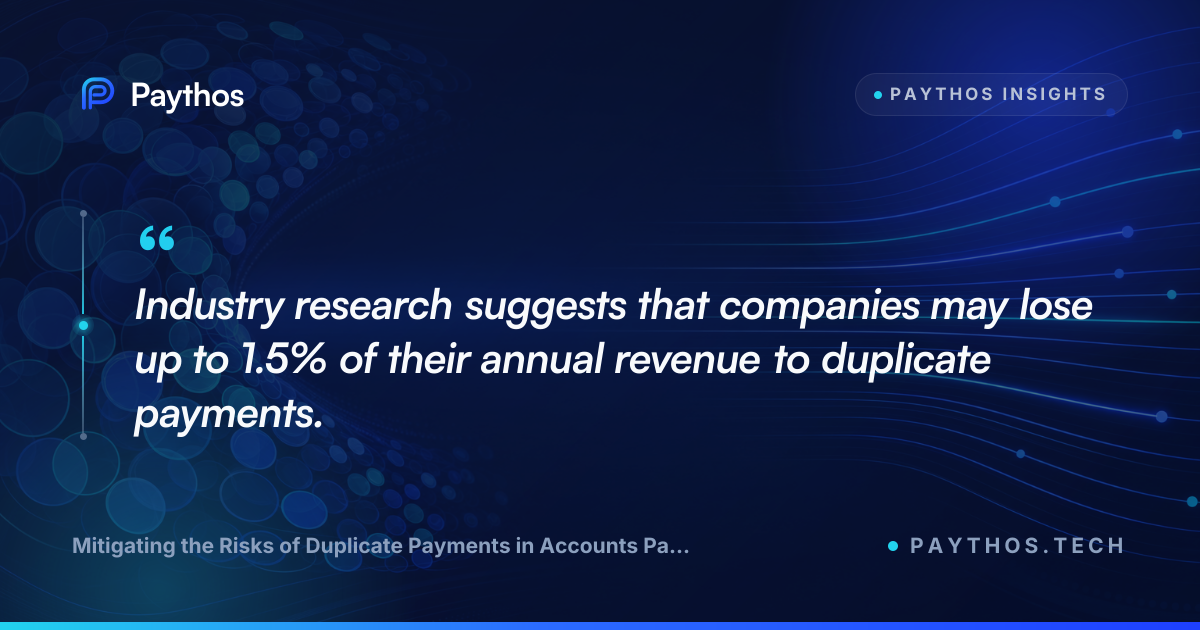
Financial Losses: Duplicate payments can lead to significant unwarranted costs. Industry research suggests that companies may lose up to 1.5% of their annual revenue to duplicate payments. (expensepoint.com)
-
Supplier Relationships: Frequent errors may damage relationships with suppliers, leading to strained negotiations or loss of favourable terms.
-
Operational Complexity: The time spent resolving disputes and processing refunds adds unnecessary strain to finance teams.
It's crucial to implement measures that mitigate these risks effectively, especially when several systems are involved in invoice processing.
Key Strategies to Prevent Duplicate Payments
1. Centralised Invoice Management
Establishing a centralised system for invoice management can greatly reduce the likelihood of duplicate payments. This involves having one primary database where all invoices are captured and managed. A unified system allows finance teams to track the status of invoices in real-time, making it easier to spot duplicates.
2. Integration of Systems
Integrating different operational systems (such as ERP, accounting, and payment platforms) facilitates seamless data flow. When information is shared across platforms, the risk of processing the same invoice multiple times decreases. Organisations should prioritise robust API connections or middleware solutions that ensure all systems work collaboratively.
3. Implementing Checks at Entry Points
Introduce an automated verification system at the invoice entry stage. For example, any new invoice entered into the system should be checked against existing records to prevent duplicate submission. This can be enhanced by using AI-driven algorithms that score the likelihood of duplicates based on historical data.
4. Configuring Multi-Step Approval Workflows
Enforcing a multi-step approval process can help in cross-verifying invoices before payment is processed. This ensures that at least two individuals review the invoice, reducing the chances of oversight. Systems like Paythos enable configurable workflows that can enforce segregation of duties, further enhancing control.
5. Training and Awareness
Regular training sessions ensure that all employees who interact with invoices understand the processes and implications of duplicate payments. Creating awareness around the costs associated with duplicate payments can cultivate a culture of diligence within the finance team.
The Role of Technology in Duplicate Payment Prevention
Technology plays a pivotal role in preventing duplicate payments. Here are a few key technological features that can assist:
-
AI Invoice Risk Scoring: Utilising AI to assess the risk of duplicate invoices can help in prioritising which invoices require immediate attention.
-
Vendor KYC/AML Screening: By implementing vendor checks, organisations can ensure that they are familiar with their suppliers and avoid paying the same vendor twice erroneously.
-
Payment Run Scheduling: Technology that allows for the scheduling of payment runs while maintaining human oversight ensures that automated processes do not lead to errors.
The Importance of Data Accuracy and Consistency
Ensuring data accuracy and consistency is fundamental in preventing duplicate payments. When multiple systems are involved, discrepancies in data input can lead to significant issues. Inaccuracies might occur due to manual entry errors, the use of different formats, or outdated information. Implementing data validation protocols can mitigate these risks.
1. Standardised Data Entry Guidelines
Establishing standardised guidelines for data entry—such as naming conventions for vendors and invoice numbers—can greatly reduce the likelihood of duplicates. If multiple employees input information differently, the possibility of confusing existing records increases. Training staff to follow these guidelines allows for a more accurate and uniform data set.
2. Regular Auditing and Reconciliation
Regularly auditing invoices and payment records is critical to identifying potential duplicates before payments go out. Conducting reconciliation sessions between accounting systems can catch discrepancies early. According to a study by the Institute of Finance & Management, organisations that perform regular audits experience 40% fewer issues related to duplicate payments. (iofm.com)
Comparison of Duplicate Payment Solutions
Implementing various solutions to combat duplicate payments can be instrumental in their effectiveness. Below is a comparison table of key strategies, highlighting their advantages and potential limitations:
| Strategy | Advantages | Limitations |
|---|---|---|
| Centralised Invoice Management | Simplifies tracking and reduces confusion | Requires change management and potential resistance |
| System Integration | Allows seamless data flow across platforms | Initial setup can be time-consuming and costly |
| Automated Verification | Reduces human error and speeds up processing | May require initial investment in technology |
| Multi-Step Approval Workflows | Enhances review processes and accountability | Potential delays in approvals if management is not aligned |
| Data Validation Protocols | Increases data accuracy and consistency | Implementation and rigorous adherence needed |
Conclusion on Data Excellence
Ultimately, the goal of any finance operation should be to maintain the highest standards of data integrity. This not only helps avoid duplicate payments but also promotes greater trust and efficiency within the organisation. By adopting comprehensive strategies and leveraging technology for enhanced accountability, organisations can not only save money but also streamline their accounts payable processes.
Leveraging these insights and implementing sound operational practices can pave the way for more secure and robust financial management in an increasingly complex landscape.
The Financial Implications of Duplicate Payments
Understanding the financial burden of duplicate payments can help fund allocation for effective prevention measures. The cost of such errors extends beyond direct lost payments; they can also include labour costs associated with resolving disputes and reconciling accounts. According to a study by the Association for Financial Professionals, the average cost to resolve a duplicate payment issue can reach £125 per incident. (expensepoint.com)
In addition to the direct costs, duplicate payments can impact cash flow management. Research from the International Institute of Finance highlights that firms experience a cash flow reduction of up to 20% when duplicate payments occur regularly, placing financial strain on operations and strategic initiatives. (expensepoint.com)
By quantifying the financial implications, organisations are better positioned to advocate for necessary investments in systems and processes that reduce the risks associated with duplicate payments. This understanding reinforces the importance of strategic investments in technology and compliance measures to streamline accounts payable operations and safeguard financial integrity.
Understanding the Risk of Duplicate Payments
When multiple systems interact with the same invoice, the potential for duplicate payments increases significantly. This issue can severely impact cash flow, exacerbate operational inefficiencies, and undermine trust with suppliers. The root of this challenge often lies in fragmented processes where invoices are not synchronised across platforms, leading to confusion and oversight.
The Impact of Duplicate Payments
Duplicate payments can have several detrimental effects:
-
Financial Losses: Duplicate payments can lead to significant unwarranted costs. Industry research suggests that companies may lose up to 1.5% of their annual revenue to duplicate payments (invoiceautomation.com).
-
Supplier Relationships: Frequent errors may damage relationships with suppliers, leading to strained negotiations or loss of favourable terms. Research indicates that late payments, of which duplicates are a common cause, can severely impact supplier satisfaction (paymentssource.com).
-
Operational Complexity: The time spent resolving disputes and processing refunds adds unnecessary strain to finance teams. A report from the Accounts Payable Network estimates that resolving a single duplicate payment takes an average of 15 hours of team time (apnetwork.com).
It's crucial to implement measures that mitigate these risks effectively, especially when several systems are involved in invoice processing.
How Paythos helps
Paythos offers several capabilities to help mitigate the risk of duplicate payments when multiple systems touch the same invoice:
-
AI Invoice Risk Scoring: This feature allows organisations to detect potential duplicate invoices before they lead to payments, enabling finance teams to prioritise their review effectively.
-
Configurable Multi-Step Approval Workflows: Paythos enables the implementation of tailored workflows where invoices are subjected to multiple levels of scrutiny, thus ensuring enhanced oversight and reducing the likelihood of duplicate payments.
-
Vendor KYC/AML Screening and Payment Holds: By verifying vendor details through KYC checks, companies can better manage their supplier relationships and mitigate the